Sales Inquiries: (252) 659-4907
Existing Clients: (252) 648-0844
Medical Offices
IT support and HIPAA compliance for small medical practices that need their technology to work reliably every day.
Your EHR Should Never Go Down Mid-Appointment At Your Office
Small medical practices run on electronic health records, connected devices, and patient data that is protected under federal law. When the EHR crashes, the network drops, or a staff account gets compromised, patient care slows down and your compliance exposure goes up.
ACS manages IT for medical offices in Carteret, Onslow, and Craven counties. We keep your systems running, your PHI protected, and your HIPAA technical safeguards in order so you can focus on your patients.
What Our IT Services Do for Medical Practices
Keeps your EHR, workstations, and devices running reliably during office hours.
Implements the HIPAA technical safeguards that protect patient information.
Maintains audit logs, access controls, and encryption as HIPAA requires.
Handles IT so your clinical staff can focus on patients, not passwords.
Backs up patient records so a hardware failure never disrupts care or scheduling.
What Clients Say About Us
Reliable IT Support Through Every Crisis
“Highly responsive and available. Protecting our computers with managed security solutions keeps our employees productive instead of dealing with viruses. Installing and managing Office 365 increases productivity by having consistent versions of programs used every day. After our dealership was flooded out by Hurricane Florence ACS was instrumental in helping us rebuild and get operational in record time. Best computer service I have used in my 30 years in the automotive business.”

Rob Van Doren
Service and Parts Director - Lookout Ford, Morehead City NC
Responsive Support That Keeps Us Working
"ACS's remote support fixes our issues allowing us to continue working. Their expertise in multiple technologies is effective, they provide rapid resolution to issues. I love the remote support capability allowing them to quickly fix issues, even if they are my mistake, without making me feel bad about it. With over 18 years of great service, ACS takes care of everything so we can concentrate on our daily business without worrying about the security or operation of our hardware and software. If you are looking for a company, responsive to change and knowledgeable to provide value for planning technology in any business, call ACS.”

Neil Whitford
Attorney - Kirkman, Whitford, Brady, Berryman & Gordon, P.A.
Local Experts With A Long-Term Vision
“Since going to Office 365 at the recommendation of ACS, it has been great for training to have everyone on the same version of Office. We look forward to using all of the advantages that Office 365 has to offer.
I value being able to speak to a local live person when I have a question or concern. ACS is prompt in responding to my questions and concerns. I depend on their expertise and appreciate them considering not only what we need now, but also a plan going forward. If you want the excellent level of service we have, call Stefan today.”

Christi Wood
Finance Director - Town of Beaufort
Professional Support That Goes Above and Beyond
“Go. Here. First. Zachary just fixed my computer in less than half an hour and charged me a very reasonable amount for labor. But more than that - he did it right in front of me while keeping up a stream of witty banter and explaining everything he was doing in terms I could understand (no back room shadiness at this place; it is completely transparent). I could literally do this particular repair myself next time, because he taught me. This is what a truly good business looks like, folks. Could not recommend more highly.”

Clara Louise
North Carolina
Restoring Trust with Expert Computer Repair
“I did not and went to a computer place in Newport. After having my laptop for a month they lost all my files to include pictures of deceased loved ones and then lied to me about my laptop being fixed. I then came to ACS Computer Services for help and they fixed my laptop at a reasonable price and in a timely manner. They were even able to find out that the other computer shop had put another persons hard drive in my computer with their personal information on it. After ACS fixed my old laptop I purchased a new one from them as a Christmas gift at a great price. Trust me you'll be sorry if you don't do business here!!”

Lonnie Ward
North Carolina
How We Support Medical Offices Every Day
Medical offices need IT that works reliably during patient hours and satisfies HIPAA's security requirements. We build our support around both, keeping your systems current and your safeguards in place without requiring your staff to become IT experts.
Keep the EHR Running
Your EHR sits at the center of your medical office's clinical workflow. We keep it accessible, secure and backed up so that a technology problem never stops you from reaching patient records.
Protect Patient Records
Protected health information is subject to strict federal rules. We secure systems that store and transmit PHI, configure access controls, and make sure your data is protected as HIPAA requires at all times.
Manage Staff Access Well
Every staff member who touches patient data is a potential exposure point. We configure role-based access so each person sees only what they need, with proper audit logging in place for greater accountability.
Handle the HIPAA Basics
HIPAA's Security Rule requires specific technical controls. We implement them, document them, and review them so your practice has a compliance picture and evidence to support it if you're reviewed.
Our Partners
We work with respected technology partners to deliver hardware, software, and cloud solutions that help your business stay productive.



Critical Technology Challenges Businesses Like Yours Face
Outdated systems, security risks, and downtime create significant barriers to running an efficient business. Many organizations struggle with stretched internal resources, limited expertise, or uncertainty about which technologies best support growth.
Reliable IT services relieve that burden by providing expertise, monitoring, and clear planning. They reduce stress for your staff, strengthen resilience against risk, and position your business to succeed in North Carolina.
Choosing The Right IT Services Partner
Not every IT services provider understands the importance of building relationships. Many focus on tools instead of outcomes, leaving you to handle communication gaps and unclear results while your team needs stability and security.
ACS Computer Services provides IT services built around transparency, communication, and responsiveness. We give you confidence that issues will be resolved quickly and systems will be maintained for both immediate performance and long-term security.

Managed IT for Medical Offices
IT Support Built Around Your Patient Schedule
Medical offices need IT support that understands the stakes during office hours. A workstation that stops working in an exam room, an EHR that loses connectivity, or a printer that won't respond during a patient visit is not just an inconvenience. ACS manages your technology with the understanding that uptime during clinical hours is not optional. We do preventive maintenance, monitor your systems, and respond to issues with the urgency that patient-facing technology requires.
Managing IT for a medical practice means building a support model around the office's clinical schedule and understanding which technology failures matter most. We track your systems, catch problems before they affect patient care, and respond quickly when something does go wrong. Here is what our managed IT service covers for medical practices in your area:
Monitors workstations, EHR connectivity, and network performance daily to catch problems before patients arrive.
Performs preventive maintenance that keeps clinical technology running reliably throughout every patient-facing workday.
Provides rapid response when something goes wrong during patient hours so care continues uninterrupted.
HIPAA Technical Safeguards
The Security Rule Requires More Than Good Intentions
HIPAA's Security Rule lists specific technical controls every covered entity must implement: access controls, audit controls, integrity controls, transmission security, and automatic logoff. Most small practices have some of these in place but not all, and the ones that are missing are often the ones that matter most in a breach investigation. ACS implements the full set of required safeguards, documents each one, and reviews them annually so your practice is compliant in practice, not just in theory.
Technical safeguards are the category of HIPAA requirements that most directly connect to your IT setup. They are also the category where small practices are most commonly found deficient in OCR audits and breach investigations. We work through each requirement systematically, implement what is missing, update what is outdated, and give you documentation that shows exactly what is in place. Here is what our HIPAA technical safeguards service covers for your practice:
Implements the access controls, audit logging, and encryption HIPAA's Security Rule specifically requires of practices.
Reviews and updates your safeguards annually as your systems, staff, and patient workflows change.
Produces clear documentation your practice can use to demonstrate compliance during an audit.
Cybersecurity for Medical Practices
PHI Is One of the Most Targeted Data Types That Exists
Medical records sell for significantly more than credit card numbers on criminal markets. Ransomware attacks targeting healthcare practices have increased sharply in recent years because attackers know small practices often have limited defenses and cannot afford downtime. ACS builds a cybersecurity layer appropriate for a small medical office: endpoint protection, email filtering, multi-factor authentication, and network monitoring, sized and priced for a practice your size, not a hospital.
Cybersecurity for a medical practice focuses on the threats that specifically target healthcare organizations: ransomware that encrypts EHR data, phishing emails that compromise staff credentials, and credential theft that enables unauthorized PHI access. We configure the controls that address these specific risks and keep them current as threats evolve. Here is what our cybersecurity service covers for medical practices:
Protects workstations and devices from ransomware and malware infections that can shut down care.
Filters phishing emails that target staff credentials and unauthorized access to patient data.
Monitors your network and accounts continuously for unauthorized access to protected health information.
Why Medical Practices in This Area Choose ACS
Most IT companies don't know the difference between a general business network and one that handles protected health information. ACS understands the HIPAA technical requirements, knows what an OCR audit looks for, and builds your IT setup accordingly.
We Know HIPAA IT
We implement HIPAA's technical safeguards as a standard part of every medical practice engagement. Access controls, audit logs, encryption, and automatic logoff are all configured correctly, documented thoroughly, and reviewed so they hold up under scrutiny.
We Prioritize Uptime
We know that a system failure during patient hours is a different problem than one at midnight. Our support model for medical practices reflects that reality with monitoring, preventive maintenance, and response tuned to clinical schedules.
BAA Ready to Sign
ACS signs a Business Associate Agreement with every medical practice before any work on covered systems begins. We understand what the BAA requires, we fulfill it, and your practice will not have to ask us twice.
Local and Here for You
ACS is based in Morehead City and serves medical practices on the Crystal Coast. When your network drops during office hours, you reach someone who knows your practice, your setup, and what matters most right now.
FAQs About Our Medical Offices Service
Does HIPAA apply to our practice if we're just a few providers?
Yes. HIPAA applies to any covered entity that handles protected health information, regardless of practice size. The Office for Civil Rights has taken enforcement action against solo practices and small clinics. Size reduces some administrative burden but does not exempt a practice from the core requirements.
What are the HIPAA technical safeguards our practice is required to implement?
The Security Rule requires access controls, audit controls, integrity controls, transmission security, and automatic logoff. Each has specific implementation options depending on your setup. Most small practices have some of these in place but gaps in documentation or configuration are common, and those gaps are exactly what OCR looks for in an audit.
What happens if a staff member's credentials get used to access records?
That is a HIPAA breach event and it triggers a specific response protocol under the Breach Notification Rule. Depending on the scope of the access, you may be required to notify affected patients and the Department of Health and Human Services. Proper access controls, audit logging, and multi-factor authentication significantly reduce the chance of this happening and help contain the damage if it does.
Does ACS sign Business Associate Agreements for practices that work with us?
Yes. ACS operates as a business associate under HIPAA for the medical practices we support and we sign a Business Associate Agreement as standard practice before any work begins on systems that handle PHI. We understand the obligations it creates and we fulfill them.
Headquarters
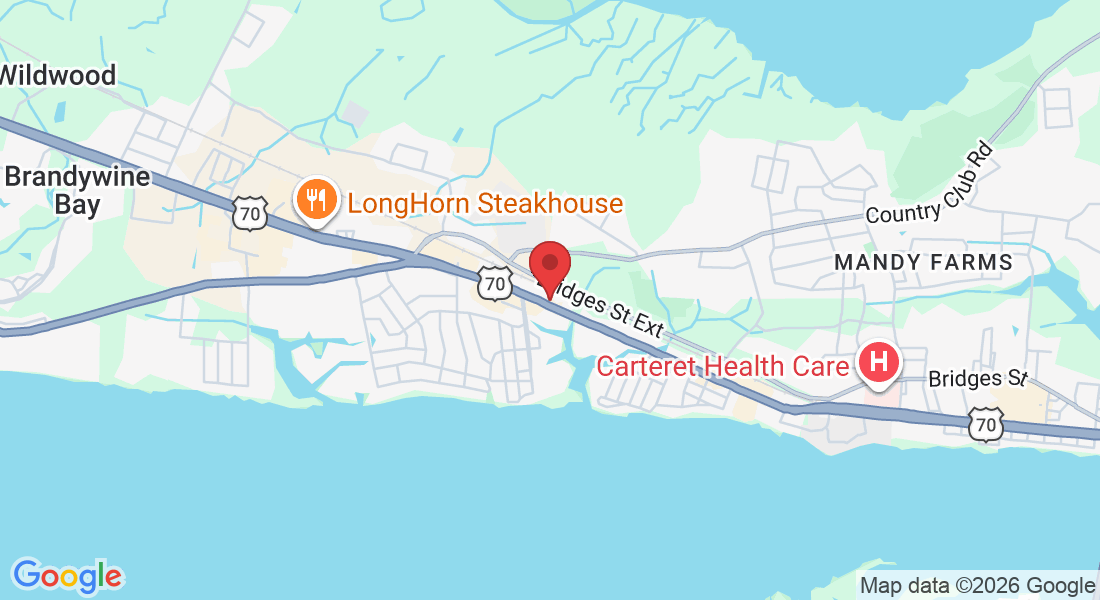
Ste A, Morehead City NC 28557